Health and Safety Policy for Landscaping Swisscottage
 Landscaping Swisscottage is committed to carrying out all outdoor work with a clear focus on health, safety, and environmental responsibility. This policy sets out the principles that guide every stage of our landscaping activities, from initial site preparation to the completion of maintenance tasks. We aim to protect workers, clients, visitors, and members of the public from avoidable harm while maintaining a high standard of service. Safety is not treated as a separate task; it is embedded in planning, supervision, and day-to-day work practices.
Our approach is based on identifying hazards early and controlling them before work begins. Landscaping can involve machinery, tools, lifting, digging, working at height, manual handling, and exposure to changing weather conditions. Because of this, every project is reviewed to determine what risks may be present and what precautions are required. All team members are expected to work responsibly, follow instructions, and raise concerns immediately if conditions change or something appears unsafe.
We also recognise that landscaping work often takes place in shared spaces where the public, neighbours, and other contractors may be present. For that reason, safe work zones, warning signs, and clear boundaries are used where needed. When we are working in any landscaping environment, care is taken to reduce disruption and prevent incidents caused by slipping, tripping, falling objects, or contact with equipment. Preventive action is always preferred over corrective action.
 Risk assessment is central to our health and safety policy. Before work starts, supervisors review the site, activities, tools, and materials to identify hazards and decide on suitable control measures. This may include checks for uneven ground, hidden services, unstable surfaces, overhead obstacles, sharp materials, or poor visibility. Landscaping Swisscottage uses this information to plan safe working methods and to match tasks with the skills and physical capability of the workforce.
Safe use of equipment is essential. All tools, machines, and powered devices must be suitable for the task, properly maintained, and used only by trained personnel. Workers are expected to inspect equipment before use and report any defects without delay. Damaged or unsafe equipment is removed from service until it has been repaired or replaced. Protective equipment such as gloves, eye protection, hearing protection, sturdy footwear, and high-visibility clothing may be required depending on the activity.
 Manual handling is another important area of control. Landscaping often involves carrying soil, plants, paving materials, or waste, which can lead to strain or injury if done incorrectly. Tasks should be planned to reduce unnecessary lifting, and mechanical aids should be used whenever possible. Team members are encouraged to work in a way that protects posture, avoids overexertion, and allows for rest breaks where required. Any worker who feels unable to complete a task safely must speak up immediately.
Workplace Responsibilities and Safe Practices
Everyone involved in our landscaping services has a duty to contribute to a safe working environment. Managers and supervisors are responsible for setting clear expectations, providing appropriate instruction, and ensuring that work is carried out in line with this policy. Employees and contractors must cooperate with safety procedures, use equipment correctly, and report hazards, near misses, incidents, or unsafe behaviour as soon as possible.
Weather conditions can create significant risks in outdoor work. Heat, cold, wind, rain, frost, and poor light can affect both the safety and quality of landscaping operations. Work schedules may be adjusted when conditions become unsafe, and additional precautions may be taken to prevent slips, dehydration, exposure, or reduced visibility. Flexible planning helps reduce unnecessary risk while supporting efficient service delivery.
We also manage risks linked to the use of chemicals and plant care products. Any substance used in landscaping must be stored, handled, and applied according to its safety requirements. Clear labelling, secure storage, and suitable protective measures are required to reduce the risk of exposure, spillage, or environmental harm. Where possible, safer alternatives are preferred. Good hygiene practices, including handwashing and avoiding contamination of food or drink, are always expected.
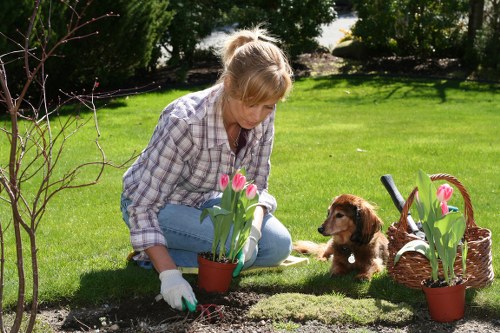 In addition, site housekeeping plays a major role in accident prevention. Debris, loose materials, cords, packaging, and waste must be kept under control so that pathways and work areas remain safe. Tools should be stored properly when not in use, and access routes should be kept clear. Orderly working conditions reduce the chance of falls and make it easier to respond quickly in an emergency.
Emergency planning is part of every job. Team members must know how to respond to injuries, fires, severe weather, utility issues, or other urgent situations. First aid arrangements should be appropriate to the size and type of work being undertaken, and incidents must be recorded and reviewed so that lessons can be learned. When an accident or near miss occurs, the situation is assessed carefully to prevent recurrence.
Training and supervision are ongoing commitments. New workers receive suitable induction on hazards, equipment, reporting procedures, and expected behaviour. Refresher instruction is provided when processes change or when additional competence is needed. Competence and awareness are essential to safe landscaping work, and supervisors monitor performance to ensure standards remain consistent.
Review, Monitoring, and Continuous Improvement
 This policy is reviewed regularly to make sure it remains effective, practical, and relevant to the work we carry out. Feedback from inspections, incident reports, and operational observations is used to improve procedures and strengthen controls. The aim is not only to comply with safety requirements but to build a culture where caution, communication, and professionalism are part of everyday practice.
Landscaping Swisscottage expects every person connected with our operations to support a safe and respectful working environment. By managing risk carefully, maintaining equipment properly, using appropriate protective measures, and responding promptly to hazards, we help protect people and preserve the quality of every project. Health and safety are treated as essential values, not optional extras, and they guide the way we plan, work, and improve.