Recycling and Sustainability for Landscaping Swisscottage
 Landscaping Swisscottage is built around a simple idea: beautiful outdoor spaces should be created with care for the environment as well as for the people who use them. Our approach to landscaping sustainability in Swisscottage starts with reducing waste, reusing materials where possible, and choosing disposal methods that support responsible recycling across the local area. From garden clearance and soil management to the handling of green waste, we aim to keep materials in circulation for as long as possible.
We work toward a recycling percentage target of 90% across suitable project waste, with a focus on separating recyclable materials at source. In practice, this means sorting wood, soil, green cuttings, cardboard, metal, and plastics before they are sent onward. This type of careful separation reflects how many nearby boroughs approach waste management, with distinct streams for garden waste, dry mixed recycling, and residual refuse. By matching those local expectations, Swisscottage landscaping recycling becomes more efficient and less reliant on general waste disposal.
Where reusable materials can be salvaged, they are set aside for future use or passed to local partners rather than discarded. Stone, timber, aggregates, and quality plant containers can often be recovered for another life, while organic waste is directed toward composting or mulching wherever suitable. Landscaping recycling in Swisscottage is not just about what leaves a site; it is also about what can be retained, repaired, or repurposed to reduce the demand for new raw materials.
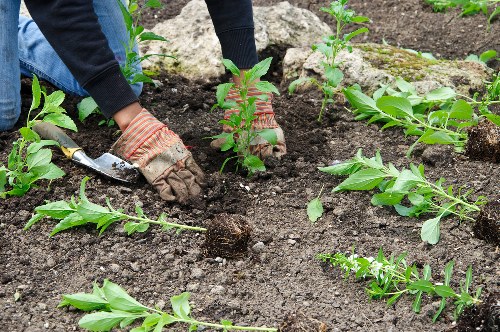 A major part of sustainable landscaping is understanding the local waste network. We make use of nearby transfer stations and recycling facilities to sort and move materials efficiently, reducing unnecessary vehicle miles and helping each load go to the most appropriate destination. Local transfer stations are especially useful for separating mixed construction and garden waste into usable fractions, while ensuring that green waste, rubble, and non-recyclable items are handled in line with borough recycling rules and environmental standards.
These facilities support a practical and accountable route for materials collected during garden redesigns, hedge removals, turf lifting, and planting upgrades. In areas like Swiss Cottage, where space is limited and projects often require careful logistics, using transfer stations helps keep sites tidy and operations streamlined. It also allows us to align with the wider borough emphasis on waste separation, including dry recycling, compostable green waste, and specialist handling for items that need separate treatment.
By keeping disposal routes local wherever possible, recycling landscaping materials in Swisscottage becomes a lower-impact process. This approach supports cleaner sorting, fewer contamination issues, and better recovery rates for items that can be recycled or reused. It also reinforces a key principle of sustainable landscape work: the right material should go to the right place, not simply the nearest bin.
 Partnerships with charities are another important part of our sustainability strategy. When projects produce healthy plants, suitable topsoil, pots, timber offcuts, or decorative items that no longer fit the design, we look for opportunities to pass them on through charitable reuse channels. These partnerships help extend the life of materials while supporting community organisations that can use them in gardens, shared spaces, training schemes, or low-cost refurbishment projects.
Charitable reuse is especially valuable for items that still have practical value but are no longer needed on a project site. Instead of sending them for processing, we prioritise donation or redistribution where appropriate. This reduces waste and helps create a circular flow of materials, which is central to landscaping Swisscottage recycling. It also reflects the wider local culture of responsible sorting and reuse, where residents and businesses are encouraged to think carefully about what can be repaired, donated, or separated for recycling.
In addition to charity partnerships, we also support community-friendly disposal habits by working with suppliers and handlers who share our environmental aims. That means preferring routes that reduce landfill dependency and increase the chance of a second use. Over time, these choices make sustainable landscaping feel less like a one-off action and more like a regular part of how projects are planned and delivered.
 Transport is a major factor in the environmental impact of any landscaping service, which is why we are investing in low-carbon vans for our day-to-day operations. These vehicles help reduce emissions during local travel between sites, transfer stations, and material suppliers, while still providing the capacity needed for tools, plants, and recyclable loads. As a result, Swisscottage landscaping sustainability is supported not only by what we recycle, but also by how we move around the area.
Low-carbon vans are particularly important in busy urban settings where short journeys can add up quickly. By selecting more efficient vehicles and planning routes carefully, we reduce fuel use and avoid unnecessary trips. That improves operational efficiency and contributes to cleaner air in the neighbourhood. It also complements the borough-level emphasis on responsible waste handling, where the goal is often to separate materials properly and transport them in a way that limits environmental harm.
Our vehicle strategy is tied closely to waste strategy. If a load is sorted correctly, it can be taken directly to the most suitable facility instead of being moved repeatedly. That saves time, lowers emissions, and improves recycling outcomes. For landscaping recycling in Swisscottage, this joined-up approach matters: the greener the transport, the stronger the sustainability result.
 Looking ahead, our commitment is to keep improving recycling rates, strengthening local reuse links, and using lower-emission transport wherever practical. We will continue to refine how materials are separated on site, so recyclable streams remain clean and easy to process. This includes everyday landscaping activities such as pruning, turf replacement, soil removal, and packaging recovery, all of which can be managed more sustainably with the right planning.
As local boroughs continue to place greater emphasis on waste separation and resource recovery, Landscaping Swisscottage aims to stay aligned with those expectations through practical, measurable action. The objective is not simply to dispose of waste responsibly, but to treat every project as an opportunity to recover value. Whether through recycling, charitable reuse, transfer-station sorting, or low-carbon delivery, our goal is to make Landscaping Swisscottage a model of environmentally conscious outdoor work.